If you’re reading this, chances are you know the deep, bone-weary exhaustion of body dissatisfaction. You know what it feels like to stand in front of a mirror and let your inner critic rip your reflection apart. You know the anxiety of getting dressed, the mental math of mealtime, and the persistent, heavy feeling that your body is a problem to be solved.
As an eating disorder dietitian, I sit across from people every day who are waging a war against their own skin. I want to validate exactly how painful that is. It makes sense that you feel this way, because we live in a culture that profits from our bodily insecurities. But to truly heal our relationship with food and our bodies, we need to name the ghost haunting the machine — so let’s talk about internalized weight bias.

What is internalized weight bias?
Systemic weight stigma — or anti-fat bias — is the societal discrimination and prejudice against people in larger bodies. We see manifestations of this bias in the diet industry, in the lack of accessible seating, in discriminatory medical care, and in the relentless media messaging that equates thinness with health, virtue, and discipline.
Internalized weight bias happens when we absorb those toxic cultural messages and turn them inward against ourselves.
According to a 2018 systemic review of weight bias research, [1] internalized weight bias happens when someone endorses negative stereotypes about body weight (e.g., that higher-weight people are lazy, lack willpower, or are unattractive) and applies these stereotypes to themself, leading to profound self-devaluation.
Internalized weight bias is the diet culture [2] living inside your head. It’s the belief that your worth is inextricably tied to your weight. And here is the most crucial, often misunderstood part: internalized weight bias does not discriminate by body size. It infects all of us, showing up differently based on the particular body we inhabit as our “earth suit.”
How internalized weight bias impacts larger bodies
For individuals living in larger, often marginalized bodies, internalized weight bias can be insidious because it mirrors the very real external discrimination they face every day.
When you live in a fat body, internalized weight bias often sounds like self-blame. If a doctor dismisses a legitimate medical concern and tells you to “just lose weight,” internalized weight bias is the voice that whispers, “They’re right. This is my fault.”
Research demonstrates that this self-directed stigma has catastrophic health consequences. Studies, such as those conducted by UCLA researcher Janet Tomiyama (who happens to also be an excellent, very funny human, btw) show that experiencing and internalizing weight stigma triggers physiological stress responses [3], raising cortisol levels and actually contributing to the metabolic markers such as high cholesterol and high blood sugar that diet culture blames on weight alone.
Behaviorally, internalized weight bias in larger bodies often manifests as a devastating disconnection from the self. It looks like:
- The “waiting to live” syndrome. Putting off buying clothes that fit, going to the beach, or dating until you reach a “goal weight.”
- Medical avoidance. Canceling doctor’s appointments out of fear of being weighed and then shamed.
- Severing of interoception. Interoception [4] is our ability to perceive internal bodily sensations — like a full bladder, a racing heart, or cues of hunger and satiety. When you view your body as an enemy that needs to be starved or shrunk, you learn to actively ignore its signals. You lose trust in your own biology, abandoning the intuitive eating skills you were born with.
How internalized weight bias drives eating disorders in thin bodies
There is a common misconception that because thin privilege exists (and it absolutely does — thin people do not face systemic barriers to healthcare, employment, or public spaces based on their size), thin people do not experience weight bias.
This is utterly false. In fact, in my eating disorder practice, internalized weight bias is the driver behind some of the most severe restrictive and compensatory behaviors in thin clients.
For people in straight-sized or thin bodies, internalized weight bias manifests as an absolute, paralyzing terror of fatness. They have absorbed the message that fat is the worst thing a person can be, and they will go to life-threatening lengths to ensure they do not become it. It looks like:
- Hyper-vigilance and body checking. Constantly measuring, weighing, or pinching the body to ensure it hasn’t expanded.
- Orthorexia [5] and the illusion of “health.” Masking severe food restriction and fear of weight gain under the socially acceptable guise of “clean eating” or “lifestyle medicine.”
- The privilege trap. Our culture continuously rewards and praises their thinness, which validates their eating disorder. The compliments they receive act as a behavioral reinforcement, making the internalized bias even harder to dismantle. They are trapped on a pedestal, terrified of the fall.
Here, too, interoceptive awareness is destroyed. You can’t eat intuitively if your food choices are dictated by a terror of weight gain rather than a response to biological hunger.
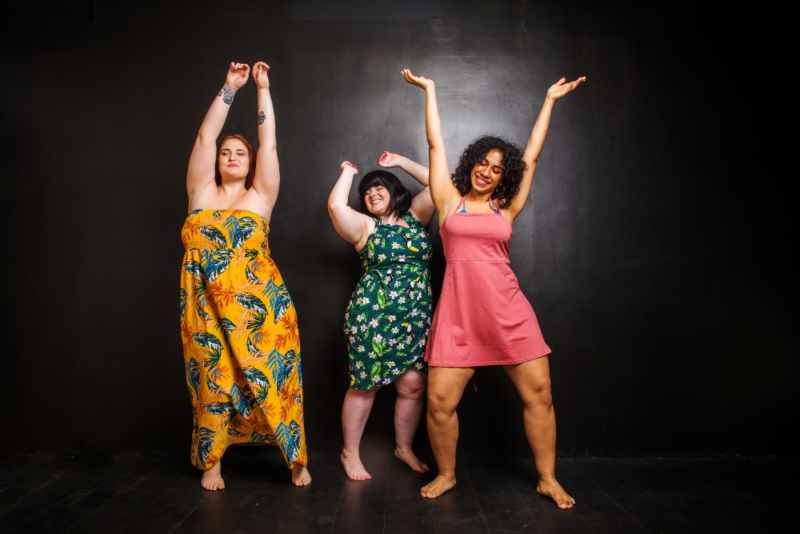
Reclaiming your body: a weight-inclusive path to healing
I’ve said it before, and I’ll say it again: you can’t hate yourself into a version of yourself that you love. Beating yourself up via internalized weight bias has never led to sustained health, peace, or well-being. So, how do you begin to untangle it?
The antidote to internalized weight bias is ultimately rooted in the Health at Every Size (HAES) framework [6] and the principles of Intuitive Eating [7]. It’s essential to shift our focus away from external manipulation and toward internal connection.
We must rebuild interoceptive awareness. Research highlights how interoception is frequently blunted in individuals with eating disorders and high body dissatisfaction/distrust [8]. Healing requires a gentle, patient re-introduction to your own internal cues. It means pausing before a meal to ask, “What does my body actually need right now?” rather than “What am I allowed to have?” It means engaging in movement because it feels joyful and regulating, rather than as a punishment for what you ate.
Dismantling internalized weight bias is not a one-and-done event — it’s an ongoing practice of grief and unlearning. It requires grieving the time and energy diet culture stole from you [9]. It requires noticing the critical voice in your head, acknowledging where it came from, and consciously choosing not to believe it.
In the excellent words of Sonya Renee Taylor [10], your body is not an apology. It is not a project, a before picture, or a problem to be solved. It is your home. You deserve to live in it peacefully, exactly as it is today.
Q: What is an example of internalized weight bias?
A: An example of internalized weight bias is believing that you are less worthy of love or respect because you are in a larger body — or that you will become less worthy of love or respect if you gain weight.
Q: How do you get rid of internalized weight bias?
A: Getting rid of internalized weight bias is a journey. Initial steps include practicing shifting your focus to your internal cues rather than your outward appearance, reminding yourself of your many internal qualities, taking good care of your here-and-now body, and learning more about the systemic and societal messaging that encourages us to not feel good about ourselves if we don’t quite match certain appearance ideals.

Disclaimer: All information provided here is of a general nature and is furnished only for educational purposes. This information is not to be taken as medical or other health advice pertaining to an individual’s specific health or medical condition. You agree that the use of this information is at your own risk.
Hi, I’m Carrie Dennett [11], MPH, RDN, a weight-inclusive registered dietitian, nutrition therapist and body image counselor. I offer compassionate, individualized care for adolescents adults of all ages, shapes, sizes and genders who want to heal from an eating disorder, disordered eating or chronic dieting [12], cultivate an accepting, respectful relationship with their bodies, and gain the freedom to live an authentic, meaningful life without obsessing about food.
Need 1-on-1 help for your nutrition, eating, or body image concerns? Find out how to get started [13]. I’m in-network with Regence BCBS, FirstChoice Health, Providence of Oregon Health Plan and United Healthcare, and can bill Blue Cross and/or Blue Shield insurances in many states. If I don’t take your insurance, I can help you seek reimbursement on your own. To learn more, explore my insurance and services areas page [14].