If you feel like diet and weight loss medication talk is everywhere all the time and you’re sick of it — or you’ve simply been there, done that, and now know it doesn’t work — there can be an obvious appeal to looking for something different, something better.
Even though it’s not new — it’s been around since the mid-1990s — intuitive eating be an attractive, enticing option. (Certainly, it’s been life-changing for many of my clients.) Unfortunately, there’s a common misconception that intuitive eating is just the “hunger and fullness diet” — eat only when you’re hungry, stop eating as soon as you feel full.
While that is a very common misconception, intuitive eating is so much more than that. At its core, it’s about removing the morality (“good/bad”) from food. It’s also about rebuilding trust in your body’s cues so you can nourish yourself well without the guilt associated with diet culture.
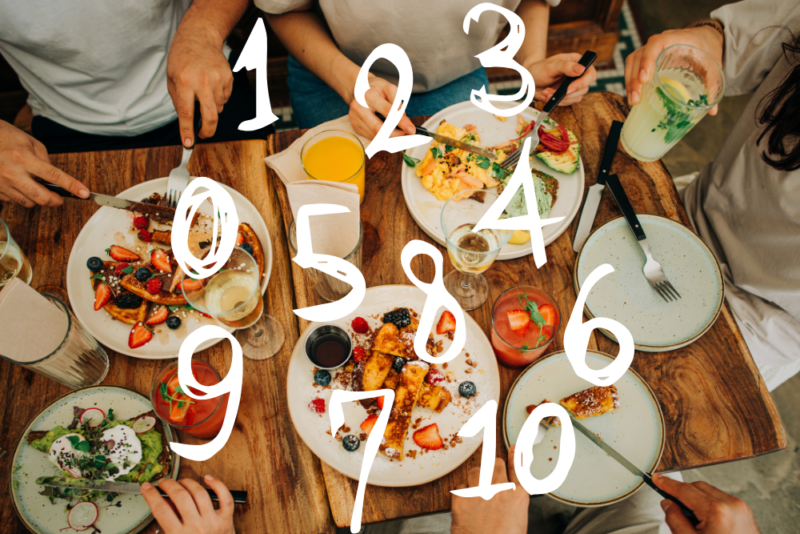
Brief overview of the 10 Principles
In case you’re not familiar, intuitive eating is organized into 10 principles that interact with and support each other:
- Reject the Diet Mentality [1]: Recognizing and acknowledging the damage that restrictive dieting can cause, becoming aware of diet mentality traits and thinking (such as willpower, obedience, failure), getting rid of dieting tools (such as scales), and showing yourself compassion.
- Honor Your Hunger [2]: Recognizing signs of biological hunger as well as those of taste hunger and emotional hunger.
- Make Peace with Food [3]: Breaking free of the deprivation-rebound eating pendulum, Last Supper eating and so on by habituating to “forbidden foods” to eliminate the urgency to overeat these foods when you do choose to enjoy them. This principle also aims to eliminate the “good” and “bad” food labels.
- Challenge the Food Police [4]: Focuses on quieting negative self-talk and black-or-white thinking about food and eating, which opens the door to neutral observations about how different foods make you feel and to making healthy food choices without guilt or deprivation.
- Discover the Satisfaction Factor [5]: When we eat foods we enjoy and “hit the spot,” ideally in a pleasant environment, we feel more satisfied and content.
- Feel Your Fullness [6]: This is about learning to recognize comfortable satiety, but it also hinges on the previous principles, because it’s harder to stop eating when you’re comfortably full if you start eating when you’re ravenous, choose foods you “should” eat but don’t like, or don’t fully believe you have permission to eat next time you feel hunger, or to eat a tasty food again next time you really want it.
- Cope with Your Emotions with Kindness [7]: This is about becoming more attuned to when the desire to eat is driven by emotion rather than hunger, to what emotions we are feeling, and to how we can best meet those needs with kindness, which sometimes may include food.
- Respect Your Body [8]: Involves making your body comfortable and being responsive to its basic needs, as well as respecting body diversity.
- Movement—Feel the Difference [9]: This involves decoupling exercise from weight loss and focusing on movement as a form of self-care.
- Honor Your Health with Gentle Nutrition [10]: This is about making food choices that honor your health and taste buds while making you feel good.
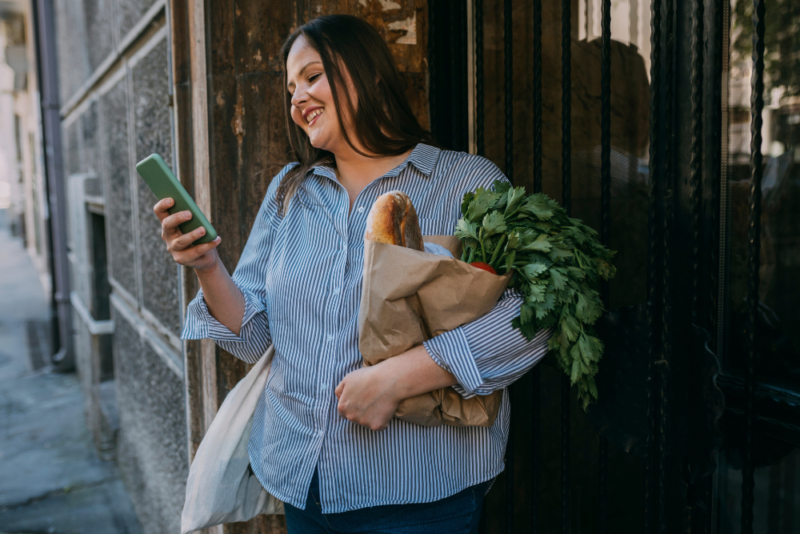
Why intuitive eating isn’t a weight loss plan
As I touched on in the beginning, two of the best-known principles — “honor your hunger” and “feel your fullness” — are frequently misinterpreted as a sort of a non-diet “hunger-fullness diet.” [11] An “intuitive” path to weight loss, if you will.
Even diet culture and the diet industry have tried to co-opt intuitive eating. (I’ve received emails from diet programs and creators of calorie-counting app wanting me to write about how they help people eat intuitively.)
But no matter who says or implies that intuitive eating is a “non-diet” way to lose weight, or helps you lose weight “naturally,” intuitive eating is not a weight loss diet, nor was it ever intended to be [12]. It’s about healing your relationship with food, mind and body. It offers a path to eating nutritiously without dieting.
Focusing on weight loss gets in the way of making food choices based on your body’s internal cues. Why? Because when you focus on weight, you’re paying attention to external measures for eating — such as portions size, calories, macros — rather than connecting with your internal cues of hunger, fullness and satisfaction.
Taking weight loss out of the equation* opens the door to the food freedom. It allows you to shift your focus to enjoying eating and treating your body with respect and kindness.
My experience is that some people lose weight after adopting and practicing intuitive eating for a time, some people gain weight, and some people stay at essentially the same weight. Often, this depends on whether is above or below their genetically predetermined weight* when they start to practice intuitive eating.
*This is why I feel that doing body image work is an essential partner to intuitive eating work.
 [13]
[13]The difference between ‘impulse eating’ and ‘intuitive eating’
It’s not uncommon for me to have a new client who’s says they’ve been practicing intuitive eating by “letting myself have whatever food I want whenever I want it.”
Unfortunately, that’s impulsive eating, not intuitive eating.
Yes, part of making peace with food is having unconditional permission to eat, something else that is frequently misunderstood. Just as intuitive eating isn’t the “hunger-fullness diet,” it’s also not the “f*ck it all diet.”
Intuitive eating pairs that unconditional permission to eat with attunement to the physical sensations [14] such as hunger and fullness as well as the physical sensations that accompany emotions [15].
- When you have the thought that you want a food and you automatically find and eat that food, you’re not listening to your body.
- You’re not checking in to see if you’re hungry at that moment. (Or, maybe you do, but you’re not taking a moment to decide which foods would best nourish and satisfy you until your next meal.)
- You’re not considering how that food might make you feel physically.
- You’re not assessing if something other than hunger is driving the urge to eat, such as stress or boredom. (Things that might be best addressed by things other than food.)
Sometimes, impulsive eating in people who are new to intuitive eating happens because they still haven’t fully made peace with food. They’re giving themselves “pseudo-permission” to eat.
That means you might tell yourself that there are no “good” and “bad” foods and no foods are off limits, yet (consciously or subconsciously) not believe that. So when you think about having a cookie, you rush to have that cookie before you change your mind. This is awfully similar to the type of “my diet starts Monday” Last Supper eating.
Other times, a simple misunderstanding leads to impulsive, not intuitive, eating. Someone hears a little bit about Intuitive Eating and draws the wrong conclusion. Or maybe the person doing the explaining about Intuitive Eating just wasn’t very clear.
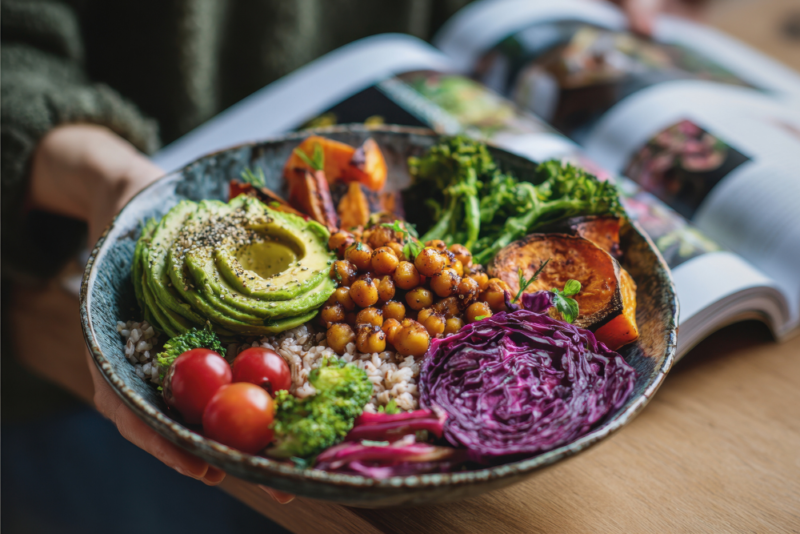
Final food for thought
As I often explain to clients, when you’re an intuitive eater, you honor your hunger and you also know that hunger isn’t an emergency. Hunger’s simply a cue that you should think about eating sooner rather than later. There might also be times when you eat when you’re not hungry.
Maybe you’re at a birthday party and there’s cake and you’re not hungry but it’s really good cake and you would like a slice and it’s a nice thing to join in this communal, celebratory food experience.
Maybe you have a meeting or appointment when you would usually eat lunch, but you decide to eat before, even though you’re not hungry yet, because if you wait until you are hungry you won’t have an opportunity to eat.
You make food choices based on:
- How hungry you are
- What will be satisfying now and keep you satisfied until you plan on eating again
- What foods you have available
- How the food will make you feel physically (i.e., do certain foods affect your energy level, digestion, etc.)
- What the food offers you nutritionally (in a gentle nutrition sense, not a rigid sense)
- How they support any nutrition-related health conditions you might have
Ultimately, this is much more respectful of your body and mind than endless cycles of restriction and chaotic rebound eating.
Need more help improving your relationship with food, eating and body image? Click here [13] to schedule a free 20-minute Discovery Call to talk about your concerns, and if you would benefit from nutrition therapy.
Intuitive Eating reading list
And, if you’re looking for a gift for an intuitive eater in your life (maybe it’s you!), here’s a quick list:
- “Intuitive Eating: A Revolutionary Anti-Diet Approach [16]” by Evelyn Tribole and Elyse Resch
- “The Intuitive Eating Workbook: 10 Principles for Nourishing a Healthy Relationship with Food [17]” by Evelyn Tribole and Elyse Resch
- “The Intuitive Eating Journal: Your Guided Journey for Nourishing a Healthy Relationship with Food [18]” by Elyse Resch
- “Intuitive Eating for Every Day: 365 Daily Practices & Inspirations to Rediscover the Pleasures of Eating [19]” by Evelyn Tribole
- “The Intuitive Eating Card Deck: 50 Bite-Sized Ways to Make Peace with Food [20]” by Elyse Resch and Evelyn Tribole
- “The Intuitive Eating Workbook for Teens: A Non-Diet, Body Positive Approach to Building a Healthy Relationship with Food [21]” by Elyse Resch
This post contains Amazon Affiliate links. As an Amazon Associate I earn from qualifying purchases.

Disclaimer: All information provided here is of a general nature and is furnished only for educational purposes. This information is not to be taken as medical or other health advice pertaining to an individual’s specific health or medical condition. You agree that the use of this information is at your own risk.
Hi, I’m Carrie Dennett [22], MPH, RDN, a weight-inclusive registered dietitian, nutrition therapist and body image counselor. I offer compassionate, individualized care for adults of all ages, shapes, sizes and genders who want to break free from eating disorders, disordered eating or chronic dieting [23]. If you need to learn how to manage IBS symptoms [24] with food, or improve your nutrition and lifestyle habits [25] to help manage a current health concern or simply support your overall health and well-being, I help people with that, too.
Need 1-on-1 help for your nutrition, eating, or body image concerns? Schedule a free 20-minute Discovery Call [13] to talk about how I can help you and explore if we’re a good fit! I’m in-network with Regence BCBS, FirstChoice Health, Providence of Oregon Health Plan and United Healthcare, and can bill Blue Cross and/or Blue Shield insurances in many states. If I don’t take your insurance, I can help you seek reimbursement on your own. To learn more, explore my insurance and services areas page [26].