If you’ve ever walked into a gym, flipped through a fitness magazine, or scrolled through workout videos online, you might get the message that exercise is something exclusively reserved for thin people — or people actively trying to become thin.
It’s a huge understatement to say that the fitness industry has a representation problem, and it deeply impacts how people in larger bodies relate to movement. I’ve had many clients tell me that they feel they have to shrink themselves to earn the right to move, or that their current body is an obstacle to overcome rather than a vessel to be experienced.
We need to dismantle that narrative. We need to talk about what it actually means to exercise while fat,* how to navigate the physical and emotional realities of a changing body, and how to shift our focus from punishing external metrics to joyful, internal presence.
*I use the word fat as a neutral descriptor of body size, like thin or short or tall.
Step out of the “waiting room”
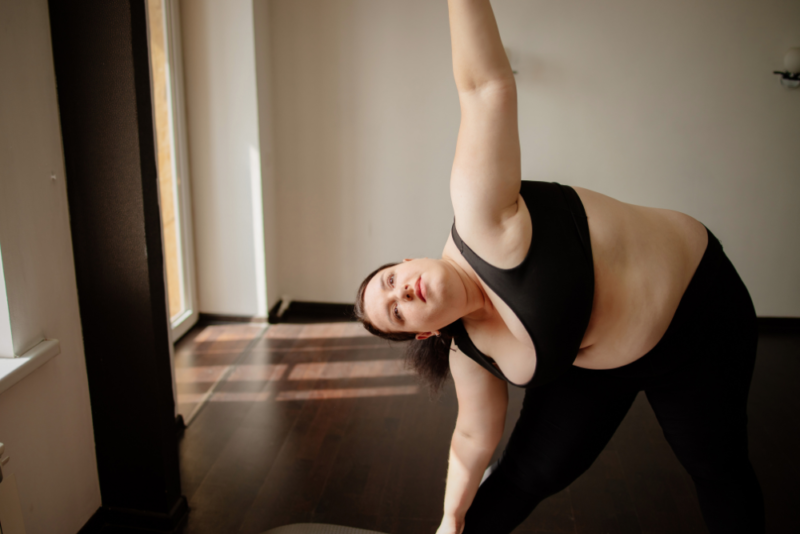
One of the most pervasive myths in diet culture is that you need to lose weight before you can start exercising — or before you can join that class, buy those leggings, or call yourself an “athlete.” This is a “waiting room” mentality. It’s the idea that your life, and your right to physical vitality, is on hold until you reach a certain size.
(This idea is currently is being reinforced by some of the rhetoric around GLP-1 weight loss medications [1], the idea that people need to take a drug to lose weight so that they are able to start exercising.)
Let’s look at the real evidence: You do not need to lose a single pound to reap the life-enhancing benefits of physical activity. Movement independently improves cardiovascular health [2], enhances insulin sensitivity (important for healthy blood sugar levels [3]), boosts mood, supports bone density, and aids in stress management — regardless of what the scale says.
When you delay exercise until you are thinner, you are depriving your current, very deserving body of these immediate benefits. Your body, exactly as it is today, deserves the endorphins, the strength, and the mental clarity that comes from moving it. You don’t have to shrink to earn your space on the pavement or hiking trail, in the pool or the studio.
 [4]
[4]When moving feels different than it used to
One of the most complex hurdles to navigate is the realization that exercising in a larger body simply feels different,especially if you’ve gained weight and are remembering what movement felt like when you were thinner.
It is incredibly common to feel a sense of frustration, or even grief, when a body that used to easily run three miles now experiences knee pain after one, or when yoga poses that used to feel accessible now feel blocked by your own belly or thighs. Biomechanically, your center of gravity has shifted. Your joints are experiencing different impact levels. Your stamina might have changed. This is basic physics and physiology, but diet culture tells us it’s a moral failure. It’s not.
If exercising feels different now, the most crucial step is to practice interoceptive awareness [5] — the ability to tune into your internal body signals. Rather than monitoring your body from the outside (“How do I look doing this?” or “I should be able to go faster”), turn your attention inward. Notice your breath. Notice your heart and lungs working hard for you. Notice the sensation of your muscles flexing or your feet hitting the ground.
When we shift our focus from performance to presence, we can begin to neutralize the frustration that we don’t “look” like someone who exercises or that exercise feels harder in some ways. Acknowledge that your body is different now, and that’s okay. You are not starting from scratch; you’re simply learning how to pilot a new, different vessel. Be kind and compassionate to yourself.
The art of modification: modifying is not failing
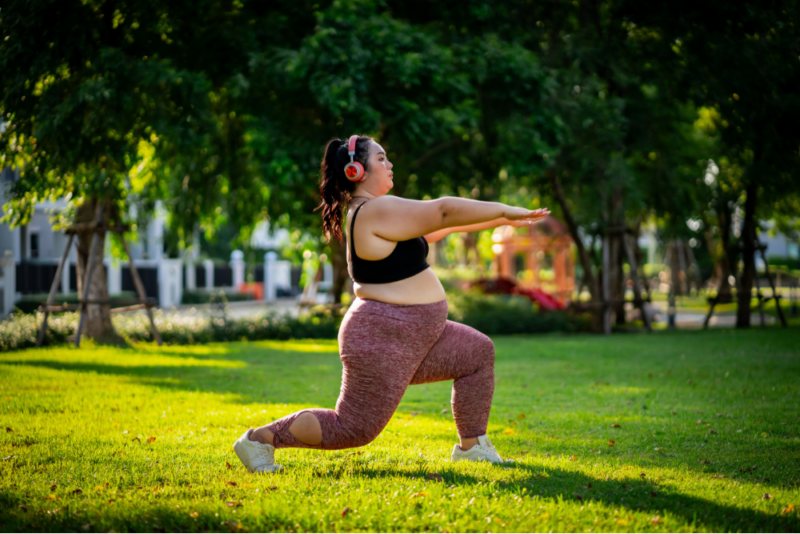
Because fitness spaces are largely designed by and for thin bodies, the “standard” way of doing an exercise might not work for a larger body. This doesn’t mean you can’t do it. It does mean the movement needs to be adapted to fit you, rather than you forcing yourself to fit the movement. Modifying activity is a profound act of self-care.
Here are a few practical ways you can modify movements and support your body:
- Change your stance. In many strength or yoga movements, simply widening your stance creates more room for your belly and hips, allowing you to breathe and move more freely.
- Utilize props. Blocks, straps, resistance bands, and chairs are not “crutches” for beginners; they are essential tools to bring the floor closer to you and reduce strain on your joints. I’ve been using yoga props for years to give an assist for my “average” flexibility, and I’ve found I appreciate them more as my own body has changed.
- Protect against chafing. Let’s talk about the physical realities. Skin rubbing together is uncomfortable and can quickly ruin a workout. Invest in high-quality, long anti-chafing shorts (like bike shorts) and anti-chafe balms. Comfort is a prerequisite for consistency.
- Manage joint impact. If walking or running is causing joint pain due to a heavier body weight, you do not have to “push through it.” Pushing through pain is how injuries happen. Pivot to low-impact, high-resistance activities. Water aerobics, swimming, recumbent cycling, and weightlifting are great ways to build strength and cardiovascular health without punishing your knees and ankles.
- Dress for the body you have today. Don’t wear clothes that dig, pinch, or roll down in hopes they will fit better eventually. Buy activewear that fits your current body comfortably. When your clothes fit, you spend less time adjusting them and more time actually being present in your body.
Reclaiming your space
Exercising while fat is entirely possible, incredibly beneficial, and, quite frankly, an act of rebellion in a world that often insists on your invisibility.
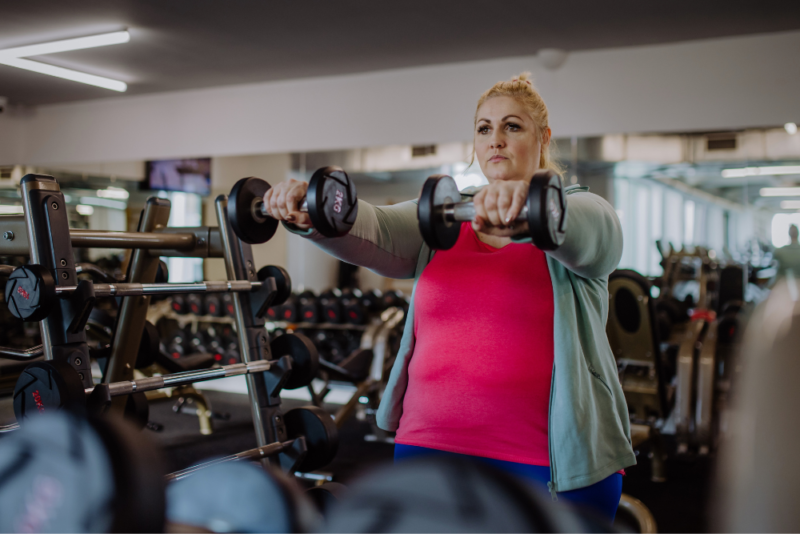
I’ve had clients who truly enjoy exercise, who — before they started to work with me — would exercise less when their weight had yo-yoed up. When they reclaimed movement as their right, when they felt the freedom to take up space in the gym without hiding under a baggy T-shirt, their worlds expanded. They felt powerful.
Your goal right now isn’t to burn calories or to punish yourself for what you ate. Your goal is embodiment [6]. It’s about getting your heart rate up, getting your hands dirty in the garden, feeling your muscles work, and taking up space. Tune out the external noise, tune into your internal signals, and move the body you have today [7]. It is a good body, and it deserves to move [8].
Disclaimer: All information provided here is of a general nature and is furnished only for educational purposes. This information is not to be taken as medical or other health advice pertaining to an individual’s specific health or medical condition. You agree that the use of this information is at your own risk.
Hi, I’m Carrie Dennett [9], MPH, RDN, a weight-inclusive registered dietitian, nutrition therapist and body image counselor. I offer compassionate, individualized care for adults of all ages, shapes, sizes and genders who want to break free from eating disorders, disordered eating or chronic dieting [10]. If you need to learn how to manage IBS symptoms [11] with food, or improve your nutrition and lifestyle habits [12] to help manage a current health concern or simply support your overall health and well-being, I help people with that, too.
Need 1-on-1 help for your nutrition, eating, or body image concerns? Schedule a free 20-minute Discovery Call [4] to talk about how I can help you and explore if we’re a good fit! I’m in-network with Regence BCBS, FirstChoice Health, Providence of Oregon Health Plan and United Healthcare, and can bill Blue Cross and/or Blue Shield insurances in many states. If I don’t take your insurance, I can help you seek reimbursement on your own. To learn more, explore my insurance and services areas page [13].