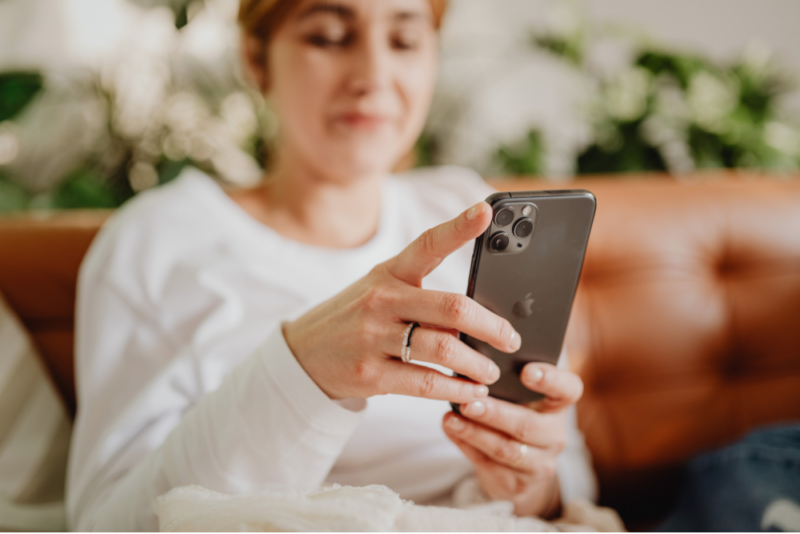
In recent years, the negative impact of social media on mental health has sparked global debate, leading some governments to consider outright bans for minors. For young women in particular, platforms like Instagram and TikTok have become pervasive elements of daily life.
High school and college-educated women aged 18 to 34 are the heaviest users of these applications, averaging about 2.5 hours of daily screen time. While these platforms offer connection and entertainment, they’re also heavily saturated with appearance-focused content — setting unrealistic beauty ideals characterized by flawless skin/hair/makeup, lean physiques, and curated lifestyles.
Historically, mainstream advice for combating the mental health toll of screen time has centered on the “digital detox” — a generic recommendation to completely disconnect from devices and social media for a set period.
However, evidence regarding the effectiveness of total abstinence is mixed. Plus, previous research has largely focused on comparing total abstinence to normal use, ignoring the reality that complete disconnection is often impractical and unsustainable for young adults. I would argue that it’s often impractical and unsustainable for adults that are no longer “young.”
To address this gap, a 2025 randomized controlled trial directly compared the effectiveness of three distinct 7-day social media intervention strategies. The goal was to determine whether altering how young women engage with social media — rather than just if they engage — could effectively reduce negative body image and improve overall wellbeing.
Why social media harms body image: the science
To understand why social media interventions are necessary, the study authors based their research on two established sociocultural frameworks (stay with me):
- The tripartite influence model: This model posits that body dissatisfaction stems from pressures coming from three primary sources: family, peers, and the media. Today, social media has become the most pervasive of these influences, largely due to its algorithmic capacity to relentlessly serve users idealized imagery.
- Objectification theory: This framework explains the psychological toll of living in a culture that constantly evaluates women’s bodies. Frequent exposure to media that portrays women as objects of evaluation can lead to self-objectification — a state where women begin to prioritize their physical appearance over their internal traits or competence. This triggers a negative cascade of body checking, appearance anxiety, and shame.
On platforms like TikTok and Instagram, appearance-related content — such as “Get Ready With Me” (#GRWM) tutorials, fitness updates, and heavily filtered selfies — dominates the algorithm.
Because these platforms prioritize high-engagement content, emotionally triggering posts about idealized beauty standards propagate like the weeds in my garden (sigh). Over time, heavy consumption of this content is strongly associated with increased body dissatisfaction, lowered body appreciation, and diminished overall wellbeing — something you may have noticed yourself.
Testing three social media detox strategies
To test which of the three interventions actually work, the researchers recruited a sample of 175 young women aged 17 to 35 (average age 22.7). Participants were randomly assigned to one of four groups for seven days:
- Insta/TikTok break (total abstinence): Participants in this group were instructed to completely stop using Instagram and TikTok for the full seven days.
- Daily time-cap (usage reduction): Participants were allowed to use the platforms but were strictly limited to a maximum of 30 minutes of scrolling per day.
- Insta/TikTok cleanse (digital pruning): Participants in this group did not reduce their overall screen time. Instead, they actively “cleansed” their feeds by unfollowing or blocking accounts that posted appearance-focused content, influencers who triggered body comparison, and idealized imagery.
- Control group (use as usual): Participants were told to continue their normal social media habits without making any changes.
The researchers measured several psychological variables across three time points: a baseline assessment, a mid-week check-in (Day 3), and a posttest assessment (Day 7). The core metrics tracked included appearance satisfaction, overall wellbeing, self-objectification, body appreciation, and internalized media pressure.

Does a social media detox work? Key findings
The study results challenge the assumption that total abstinence is the only way to protect mental health on social media. Instead, the data revealed more nuanced benefits, depending on which strategy a participant was assigned to:
1. Improvements in appearance satisfaction
Perhaps the most significant finding was that all three active detox strategies — the break, the time-cap, and the cleanse — resulted in measurable improvements in appearance satisfaction from baseline to the end of the week. Unsurprisingly, the control group experienced no changes.
Notably, the cleanse group (who removed appearance-focused content from their feeds) showed a unique trajectory: their appearance satisfaction continued to climb significantly between Day 3 and the Day 7. This suggests that actively curating a feed to remove toxic triggers has a compounding, positive effect on how young women view their own bodies, even if they spend the same amount of time on the app.
2. Improvements in overall wellbeing
When looking at general wellbeing (feeling healthy, happy, and fulfilled), the strategies yielded different results. The daily time-cap group (limiting use to 30 minutes a day) was the only group to show a significant improvement in overall wellbeing from baseline to the end of the week.
However, both the total abstinence group and the time-cap group experienced boosts in wellbeing between Day 3 and Day 7. This indicates that while taking a break or limiting time can be difficult in the first few days (potentially due to FOMO or habit-breaking friction), the psychological benefits of reduced screen time begin to appear in the latter half of the week.
3. Self-objectification and body appreciation
Interestingly, while appearance satisfaction and wellbeing improved, the researchers did not find significant changes across the groups regarding deep-seated traits like self-objectification or overall body appreciation. This is likely because while a short 7-day intervention is enough to alter mood and immediate appearance satisfaction, structural psychological shifts (like dismantling internalized self-objectification) require longer-term interventions.
Practical takeaways for your digital boundaries
I think this research offers a practical blueprint for navigating social media. It also demonstrates that a “one-size-fits-all” approach to digital detoxing is unnecessary and often unhelpful.
For policymakers and mental health professionals, this data suggests that complete bans or total abstinence aren’t the only ways to safeguard children, teens and young adults. While taking a full break works for some, it is difficult to maintain in a society where social media is heavily intertwined with daily communication.
Instead, the study highlights two highly effective, sustainable alternatives:
- For boosting general wellbeing: Setting a strict 30-minute daily app timer is the most effective approach. By capping time, users prevent the algorithmic “doomscrolling” that drains mental energy, without fully isolating themselves from their digital social circles.
- For protecting body image: “Digital pruning” or cleansing is incredibly powerful. By simply unfollowing influencers, blocking beauty-standard content, and filling their feeds with diverse, non-appearance-focused interests, young women can significantly improve how they feel about their own bodies.
My personal social media boundaries
Some days, I very much have a “burn it all down” attitude towards social media. I also actively avoid TikTok and the app formally known as Twitter, because they are flaming dumpster fires. (Threads is getting that way, too, so even though I have an account, I don’t use it.) I stay on Facebook mostly because I belong to some groups that offer me benefit, and some small businesses use FB instead of having a website (but I never scroll).
I’m mostly on Instagram, largely for the pretty pictures. I’ve cleansed my feed of any content that feels stressful (this is related more to the political climate than body ideals, because I never followed that kind of content). Instead, my feed is mostly gardening, architecture/interior design, golden retrievers, a few recipe accounts, wildlife, like-minded fellow dietitians and other healthcare providers, and a select handful of celebrities who’s work I enjoy and who seem like genuinely nice people. It makes me happy to go on IG — but I still limit my time on it.
Ultimately, the study I wrote provides useful information that can empower us to take an active role in our digital consumption. You don’t have to throw your phone away to feel better (although sometimes that feels tempting) — changing who you follow and how long you scroll can be just as transformative.

Disclaimer: All information provided here is of a general nature and is furnished only for educational purposes. This information is not to be taken as medical or other health advice pertaining to an individual’s specific health or medical condition. You agree that the use of this information is at your own risk.
Hi, I’m Carrie Dennett, MPH, RDN, a weight-inclusive registered dietitian, nutrition therapist and body image counselor. I offer compassionate, individualized care for adolescents adults of all ages, shapes, sizes and genders who want to heal from an eating disorder, disordered eating or chronic dieting, cultivate an accepting, respectful relationship with their bodies, and gain the freedom to live an authentic, meaningful life without obsessing about food.
Need 1-on-1 help for your nutrition, eating, or body image concerns? Find out how to get started. I’m in-network with Regence BCBS, FirstChoice Health, Providence of Oregon Health Plan and United Healthcare, and can bill Blue Cross and/or Blue Shield insurances in many states. If I don’t take your insurance, I can help you seek reimbursement on your own. To learn more, explore my insurance and services areas page.
Print This Post