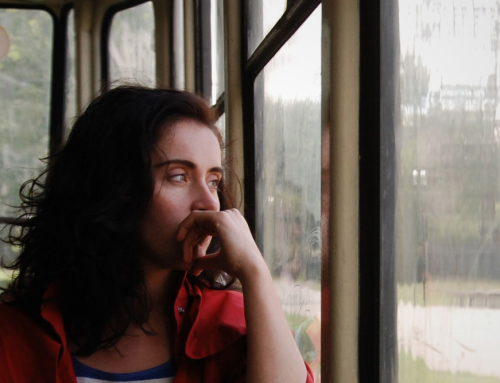
As a weight-inclusive eating disorder dietitian, I regularly sit on the other side of the computer screen from brilliant, deeply compassionate humans who are exhausted. They’re tired in their bodies, tired in their minds, and tired of trying to keep up with an impossible societal checklist. You might be familiar with that checklist yourself, the one that promises worth, safety, and belonging if you just work a little harder, exercise a little longer, or shrink a little more.
We live in a culture that treats human beings like robots. Like human “doings” rather than human beings. (Shoutout to the amazing book “Burnout: The Secret to Unlocking the Stress Cycle” for this concept.)
In this system, rest is treated like maintenance — it’s something you only schedule so you don’t break down before your next shift. We frame sleep, downtime, and stillness as rewards to be earned through sweat, labor, and compliance:
- You didn’t finish your to-do list? No rest for you.
- You skipped your workout? You haven’t “earned” the right to sit on the couch for Netflix-and-chill time.
- You exist in a larger or otherwise marginalized body? You deserve to be (unfairly) burdened with the exhausting societal narrative that you must constantly justify your right to take up space through visible exertion and moralized restraint.
Pardon me, but f*ck that. It’s time to burn that narrative to the ground. Rest is not a prize at the finish line of a grueling day. Rest is a birthright.

The toxic intersection of productivity culture and diet culture
Diet culture and productivity culture are ideological twins. Both operate on the premise that your body and your time are raw materials to be optimized, managed, and controlled.
Just think about the language we often use around movement and nourishment.
- We “burn off” calories.
- We “work off” a weekend of indulgence.
- We “pay” for our rest with productivity.
This transactional view of humanity whispers a toxic lie directly into your nervous system: “You are only as valuable as your output.”
When you internalize this belief, rest becomes a source of anxiety and guilt instead of a much-needed respite. You sit on the couch to watch a show, but your brain hums with static. You feel guilty because you aren’t answering emails, folding laundry, or keeping up with the latest wellness trends. (Maybe you find yourself trying to have it both ways by “multitasking” — answering emails, folding laundry, or looking up information on your phone while trying to watch a show. This isn’t rest, my friends.)
Even your leisure time gets co-opted by capitalism and diet/wellness culture. We try to optimize our hobbies or turn them into side hustles. We curate our self-care routines until they look and feel like another job.
In eating disorder recovery, we call this the trap of conditional worth — tying your internal value and right to belong to external achievements and approval, to productivity and perfection. Just as diet culture teaches you that your body’s value depends on its compliance with thin ideals, productivity culture teaches you that your existence depends on your constant motion. Both systems rob you of your inherent worth.
Unpacking the need to ‘earn’ your space and body
Let’s look closely at the concept of “earning your space.” Where did you learn that you have to justify your breath, your heartbeat, and your downtime?
From a very young age, we (and by we, I primarily mean girls and women) receive messages that compliance, achievement, and making sure you aren’t “too much” equal safety. If you achieve, you receive praise. If you stay small — physically, emotionally, or socially — you avoid friction. Over time, these external demands turn into an internal prison. You stop needing a boss, a teacher, a parent, or a diet culture influencer to police you, because you have learned to police yourself.
As a dietitian, I see this manifest physically. Chronic undereating and chronic overexertion are two sides of the same stress coin. When your body is starved of adequate nourishment or relentless in its physical output, your nervous system remains trapped in a chronic state of fight-or-flight. You’re biologically wired to feel unsafe when you are running on empty.
When you try to rest while your nervous system is stuck in this survival loop, your body doesn’t know how to relax. Your heart races. Your mind spirals. You confuse exhaustion with laziness, failing to realize that your body isn’t lazy — it’s deeply, chronically depleted.
Your body is NOT a machine to be driven until it fails. It’s a living, breathing ecosystem that requires quiet, stillness, and ease to thrive.

Framing rest as a radical, unapologetic necessity
What happens when we strip away the idea that we have to meet certain conditions in order to justify rest? What happens when you decide you don’t need to earn the right to lie down, stare out the window, or do absolutely nothing?
True, radical rest is unapologetic. It is luxurious, soft, and entirely disconnected from productivity metrics. It’s not about “recharging your battery” just so you can go back to being a better, more efficient worker bee. Radical rest is an act of resistanceagainst a culture that profits from your burnout.
Embracing radical rest means shifting your perspective in a few key ways:
- Dismantling the moral hierarchy of time. Sleeping for ten hours, reading fiction in the middle of the afternoon, or lying on the floor listening to music holds just as much inherent value as checking off every box on your professional spreadsheet. Time spent resting is not “wasted” time — it’s lived time.
- Separating rest from physical exertion. You don’t need to exhaust yourself at the gym or the running trail to deserve a cozy evening. Movement should feel like a celebration of, expression of, or care of your body — not a tax you pay to sit on the couch.
- Embracing pleasure for its own sake. Luxuriating in rest invites pleasure back into your life. It looks like warm baths without a nonfiction audiobook playing to educate you. It looks like lingering in bed because the sheets feel soft. It looks like giving yourself permission to be unproductive, unpolished, and completely off the grid.
Practical steps for reclaiming your right to stillness
Are you standing at the intersection of burnout, diet fatigue, and recovery? I want to offer you a gentle reminder, and an invitation.
First, the reminder:
- You don’t need to justify your exhaustion.
- You don’t need to prove that you worked hard enough to warrant a break.
- You don’t need to change your body size, clean your house, or “optimize” your morning routine to be worthy of peace.
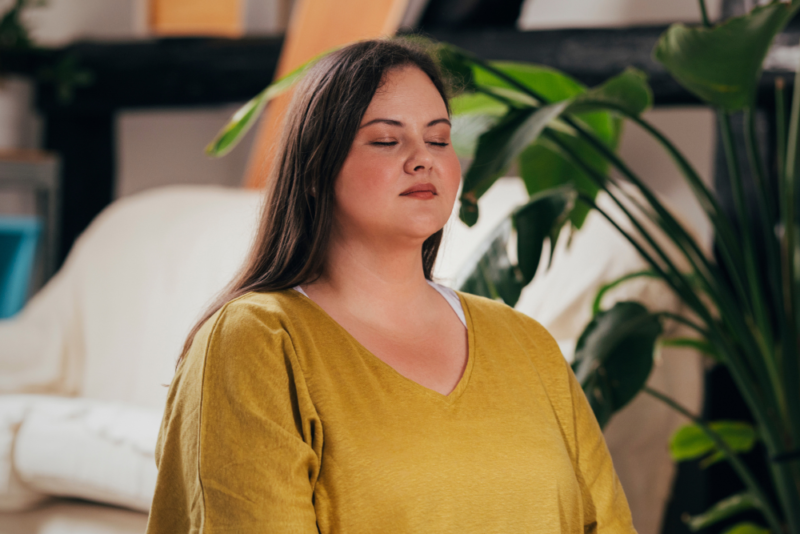
Now, the invitation. Sit down in a comfortable chair, with your back straight but not rigid, your feet on the floor, and your hands resting on your thighs. Then, relax your shoulders and drop them away from your ears. Take a deep, unhurried breath all the way down into your belly. Let your jaw soften.
Gently notice where your body makes contact — your feet on the floor, your butt in the seat. Notice your breath as you inhale and exhale. Sit, and know you’re sitting. Breathe, and know you’re breathing. That’s it. That’s enough.
Frequently Asked Questions (FAQ)
You’re allowed to rest simply because you are here. Your existence is not a transaction, and your worth isn’t up for debate.Claim your stillness, wrap yourself in softness, and let the hustle and bustle of life cool their jets and wait.
Diet culture and productivity culture both operate on the premise that your body and time are commodities to be optimized. When your worth is tied to your output or physical compliance, resting feels like “laziness” or moral failure.
Radical rest is the practice of disconnecting your right to rest, stillness, and ease from productivity metrics, exercise compliance, or body size. It treats rest as an inherent birthright rather than an earned reward.
When your body is starved of adequate nourishment or subjected to relentless physical overexertion, your nervous system remains trapped in a fight-or-flight survival loop. This makes true relaxation physically difficult, often manifesting as a racing heart or a wired-and-tired feeling when you try to sit still.
This post contains Amazon Affiliate links. As an Amazon Associate I earn from qualifying purchases.

Disclaimer: All information provided here is of a general nature and is furnished only for educational purposes. This information is not to be taken as medical or other health advice pertaining to an individual’s specific health or medical condition. You agree that the use of this information is at your own risk.
Hi, I’m Carrie Dennett, MPH, RDN, a weight-inclusive registered dietitian, nutrition therapist and body image counselor. I offer compassionate, individualized care for adolescents adults of all ages, shapes, sizes and genders who want to heal from an eating disorder, disordered eating or chronic dieting, cultivate an accepting, respectful relationship with their bodies, and gain the freedom to live an authentic, meaningful life without obsessing about food.
Need 1-on-1 help for your nutrition, eating, or body image concerns? Find out how to get started. I’m in-network with Regence BCBS, FirstChoice Health, Providence of Oregon Health Plan and United Healthcare, and can bill Blue Cross and/or Blue Shield insurances in many states. If I don’t take your insurance, I can help you seek reimbursement on your own. To learn more, explore my insurance and services areas page.
Print This Post